


jump back to top
Contact
Ingolstadt University of Technology
Contact
de | en
Home
  • Philosophy
    • Über uns
    • Career
    • Team
  • News & Press
  • C-IAD
    • C-IAD
    • Safeguarding automated driving functions using mixed-real
    • Ergonomics and Human Factors
    • Interventions in the vehicle dynamics for autonomous driv
      • STF
      • AUSM
      • KEPF
    • Safeguarding functions and HW using HIL for automated dri
    • Machine Learning for Vehicle Safety Systems
      • SUP
      • MLPOG
      • CARISSMA
      • OLAF
      • VbD
      • IDA
      • ITraCS
      • KIaF
      • Data-driven Scenario Analysis
    • Localization and Exteroceptive Sensors
      • REMI
      • MODES
    • Sensor simulation with a focus on weather conditions
    • Simulation-based stochastic efficacy analysis
    • Simulation based validation of vehicle safety functions
  • C-ISAFE
    • C-ISAFE
    • Environmental perception
    • Unavoidableness and crash severity
    • Safety in bad weather
    • Pedestrian safety
    • Safeguarding automated driving
    • Methods of passive safety
    • Safety of new mobility concepts
    • Vehicle Interior Occupant Monitoring
  • C-ECOS
    • C-ECOS
    • Team
    • Karriere
    • Car2X and Cyber-Physical Systems
    • Robustness and Durability in Electric Mobility
    • Strukturelle Integrität
    • Medical and AI Security
    • Software and System Security
    • Innovative drive systems and commercial vehicle technolog
    • Cooperative Intelligent Transport Systems
      • Car2X Communications for Road Safety and Efficiency
        • ETSI STF 585 MCO
        • KOALA-2
      • Communications for Autonomuous Drones
    • Security in Mobility
      • INFASEC - Investig. accidents involv. automated vehicles
      • DevGPT – Automotive Software Development
      • HATS3 – Hacking vehicles
      • iBattMan – Securing next-generation BMS
      • MARBEL – Protecting electrified vehicles
      • MASSiF - Developing safe software for vehicles
      • SELFY – Creating self-assessment, protection and healing
      • TRADE – Blockchain against plagiarism
      • REBORN - Forschung für sichere Second-Life-Batterien
    • Safe electromobility and accident analysis
      • Cooperative Industrial Projects
      • Behaviour under extremely high loads
      • Safe Vehicle Operation
        • SAFIR IP4-1
        • SAFIR IP4-3
        • Robustness, aging and qualification of battery systems and their safety-relevant components
      • Safe Batterysystems
        • HYPOBATT
        • PRIMA Batteries
        • SUSTAIN
        • SENSE BAY
        • SAFIR IP4-2
        • LIBERA
        • LIKO
      • AHEAD
      • Hands-on-Experiments vs. Computer-based Simulations in Energy Storage Laboratories
    • Lecture Series on Electromobility
  • Laboratories
    • Innovation Centre for Digital Vehicle Forensics
    • HyTACC – Hydrogen Testing, Application & Certif. Center
    • Abuse Attempts
    • Car2X Laboratory
    • [Translate to English:] Labor für Nachhaltige Energiesyst
    • Driving Simulator (Hexapod)
    • Drop Tower
    • Free driving systems for automated driving tests
    • Hil Laboratory
    • Driving Experience Lab
    • Indoor test facility
      • Crash system
      • Fog system
      • Rain system
      • Light system
    • Outdoor Test Facility
    • Mobile robots
    • Real Lab High Definition Testbed
    • Research vehicles
    • Security in Mobility
    • Battery Lab
    • Simulation Laboratory
    • Targets
    • Twizy (ANTON)
Contact
de | en
  1. Home
  2. Research
  3. CARISSMA
  4. Philosophy
  5. Team
  6. Carissma Team

Prof. Dr. rer. nat. Tobias Huber
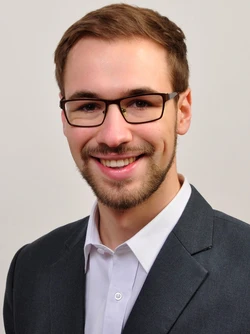

Prof. Dr. Tobias Huber
Phone +49 841 9348-7916
E-Mail Tobias.Huber@thi.de
Room: P110
Subject Area: Human-Centered Artificial Intelligence
Faculty: Fakultät I

Publications

2026
BEISSEL, Patrick, Tobias HUBER, Martin NOWAK, Elisabeth ANDRÉ und Stefan KÜNZELL, 2026. Choosing difficulty: Self-determined versus assigned tasks in motor sequence learning. Human Movement Science, 2026(107), 103483. ISSN 1872-7646. Available at: https://doi.org/10.1016/j.humov.2026.103483
2025
SÜMER, Ömer, Tobias HUBER, Dat DUONG, Suzanna E. LEDGISTER HANCHARD, Cristina CONATI, Elisabeth ANDRÉ, Benjamin D. SOLOMON und Rebekah L. WAIKEL, 2025. Evaluation of a Deep Learning and XAI based Facial Phenotyping Tool for Genetic Syndromes: A Clinical User Study [Preprint]. medRxiv. Available at: https://doi.org/10.1101/2025.06.08.25328588
2024
SCHÜTT, Anan, Tobias HUBER, Jauwairia NASIR, Cristina CONATI und Elisabeth ANDRÉ, 2024. Does Difficulty even Matter? Investigating Difficulty Adjustment and Practice Behavior in an Open-Ended Learning Task. Proceedings of the 14th Learning Analytics and Knowledge Conference. New York: ACM, Page 253-262. ISBN 979-8-4007-1618-8. Available at: https://doi.org/10.1145/3636555.3636876
SCHÜTT, Anan, Tobias HUBER und Elisabeth ANDRÉ, 2024. Estimating Chess Puzzle Difficulty Without Past Game Records Using a Human Problem-Solving Inspired Neural Network Architecture. In: DING, Wei, Chang-Tien LU, Fusheng WANG, Liping DI, Kesheng WU, Jun HUAN, Raghu NAMBIAR, Jundong LI, Filip ILIEVSKI, Ricardo BAEZA-YATES und Xiaohua HU, Editors Proceedings: 2024 IEEE International Conference on Big Data. Piscataway: IEEE, Page 8396-8402. ISBN 979-8-3503-6248-0. Available at: https://doi.org/10.1109/BigData62323.2024.10826087
SCHLAGOWSKI, Ruben, Frederick HERGET, Niklas HEIMERL, Maximilian HAMMERL, Tobias HUBER, Pamina ZWOLSKY, Jan GRUCA und Elisabeth ANDRÉ, 2024. From a Social POV: The Impact of Point of View on Player Behavior, Engagement, and Experience in a Serious Social Simulation Game. In: SMITH, Gillian, Jim WHITEHEAD, Ben SAMUEL, Katta SPIEL und Riemer VAN ROZEN, Editors Proceedings of the 19th International Conference on the Foundations of Digital Games, FDG 2024. New York: ACM. ISBN 979-8-4007-0955-5. Available at: https://doi.org/10.1145/3649921.3649936
MERTES, Silvan, Tobias HUBER, Christina KARLE, Katharina WEITZ, Ruben SCHLAGOWSKI, Cristina CONATI und Elisabeth ANDRÉ, 2024. Relevant Irrelevance: Generating Alterfactual Explanations for Image Classifiers. In: LARSON, Kate, Editors Proceedings of the Thirty-Third International Joint Conference on Artificial Intelligence, (IJCAI-24). Wien: IJCAI, Page 467-475. ISBN 978-1-956792-04-1. Available at: https://doi.org/10.24963/ijcai.2024/52
2023
WEBER, Klaus, Lukas TINNES, Tobias HUBER und Elisabeth ANDRÉ, 2023. Exploring the Effect of Visual-Based Subliminal Persuasion in Public Speeches Using Explainable AI Techniques. In: DEGEN, Helmut und Stavroula NTOA, Editors Artificial Intelligence in HCI: 4th International Conference, AI-HCI 2023, Held as Part of the 25th HCI International Conference, HCII 2023, Copenhagen, Denmark, July 23–28, 2023, Proceedings, Part I. Cham: Springer, Page 381-397. ISBN 978-3-031-35891-3. Available at: https://doi.org/10.1007/978-3-031-35891-3_23
SCHÜTT, Anan, Tobias HUBER, Ilhan ASLAN und Elisabeth ANDRÉ, 2023. Fast Dynamic Difficulty Adjustment for Intelligent Tutoring Systems with Small Datasets. In: FENG, Mingyu, Tanja KÄSER und Partha TALUKDAR, Editors Proceedings of the 16th International Conference on Educational Data Mining. Worcester: IEDMS, Page 482-489. ISBN 978-1-7336736-4-8. Available at: https://doi.org/10.5281/zenodo.8115740
HUBER, Tobias, Maximilian DEMMLER, Silvan MERTES, Matthew L. OLSON und Elisabeth ANDRÉ, 2023. GANterfactual-RL: Understanding Reinforcement Learning Agents’ Strategies through Visual Counterfactual Explanations. AAMAS ’23: Proceedings of the 2023 International Conference on Autonomous Agents and Multiagent Systems. Richland: IFAAMAS, Page 1097-1106. ISBN 978-1-4503-9432-1. Available at: https://www.southampton.ac.uk/~eg/AAMAS2023/forms/contents.htm#3E
SEPTON, Yael, Tobias HUBER, Elisabeth ANDRÉ und Ofra AMIR, 2023. Integrating Policy Summaries with Reward Decomposition for Explaining Reinforcement Learning Agents. In: MATHIEU, Philippe, Frank DIGNUM, Paulo NOVAIS und Fernando DE LA PRIETA, Editors Advances in Practical Applications of Agents, Multi-Agent Systems, and Cognitive Mimetics. The PAAMS Collection: 21st International Conference, PAAMS 2023, Guimarães, Portugal, July 12–14, 2023, Proceedings. Cham: Springer, Page 320-332. ISBN 978-3-031-37616-0. Available at: https://doi.org/10.1007/978-3-031-37616-0_27
2022
MERTES, Silvan, Christina KARLE, Tobias HUBER, Katharina WEITZ, Ruben SCHLAGOWSKI und Elisabeth ANDRÉ, 2022. Alterfactual Explanations - The Relevance of Irrelevance for Explaining AI Systems [Preprint]. arXiv. Available at: https://doi.org/10.48550/arXiv.2207.09374
HUBER, Tobias, Benedikt LIMMER und Elisabeth ANDRÉ, 2022. Benchmarking Perturbation-Based Saliency Maps for Explaining Atari Agents. Frontiers in Artificial Intelligence, 5, 903875. ISSN 2624-8212. Available at: https://doi.org/10.3389/frai.2022.903875
PRAJOD, Pooja, Dominik SCHILLER, Tobias HUBER und Elisabeth ANDRÉ, 2022. Do Deep Neural Networks Forget Facial Action Units?—Exploring the Effects of Transfer Learning in Health Related Facial Expression Recognition. In: SHABAN-NEJAD, Arash, Martin MICHALOWSKI und Simone BIANCO, Editors AI for Disease Surveillance and Pandemic Intelligence: Intelligent Disease Detection in Action. Cham: Springer, Page 217-233. ISBN 978-3-030-93080-6. Available at: https://doi.org/10.1007/978-3-030-93080-6_16
MERTES, Silvan, Tobias HUBER, Katharina WEITZ, Alexander HEIMERL und Elisabeth ANDRÉ, 2022. GANterfactual—Counterfactual Explanations for Medical Non-experts Using Generative Adversarial Learning. Frontiers in Artificial Intelligence, 5, 825565. ISSN 2624-8212. Available at: https://doi.org/10.3389/frai.2022.825565
PRAJOD, Pooja, Tobias HUBER und Elisabeth ANDRÉ, 2022. Using Explainable AI to Identify Differences Between Clinical and Experimental Pain Detection Models Based on Facial Expressions. In: JÓNSSON, Björn Þór, Cathal GURRIN, Minh-Triet TRAN, Duc Tien DANG NGUYEN, Min-Chun HU, Huynh Thi Thanh BINH und Benoit HUET, Editors MultiMedia Modeling: 28th International Conference, MMM 2022, Phu Quoc, Vietnam, June 6–10, 2022, Proceedings, Part I. Cham: Springer, Page 311-322. ISBN 978-3-030-98358-1. Available at: https://doi.org/10.1007/978-3-030-98358-1_25
2021
HUBER, Tobias, Silvan MERTES, Stanislava RANGELOVA, Simon FLUTURA und Elisabeth ANDRÉ, 2021. Dynamic Difficulty Adjustment in Virtual Reality Exergames through Experience-driven Procedural Content Generation. 2021 IEEE Symposium Series on Computational Intelligence (SSCI). Piscataway: IEEE. ISBN 978-1-7281-9048-8. Available at: https://doi.org/10.1109/SSCI50451.2021.9660086
HUBER, Tobias, Katharina WEITZ, Elisabeth ANDRÉ und Ofra AMIR, 2021. Local and global explanations of agent behavior: Integrating strategy summaries with saliency maps. Artificial Intelligence, 2021(301), 103571. ISSN 1872-7921. Available at: https://doi.org/10.1016/j.artint.2021.103571
2020
WEITZ, Katharina, Dominik SCHILLER, Ruben SCHLAGOWSKI, Tobias HUBER und Elisabeth ANDRÉ, 2020. “Let me explain!”: exploring the potential of virtual agents in explainable AI interaction design. Journal on Multimodal User Interfaces, 15(2), 87-98. ISSN 1783-8738. Available at: https://doi.org/10.1007/s12193-020-00332-0
FLUTURA, Simon, Andreas SEIDERER, Tobias HUBER, Katharina WEITZ, Ilhan ASLAN, Ruben SCHLAGOWSKI, Elisabeth ANDRÉ und Joachim RATHMANN, 2020. Interactive Machine Learning and Explainability in Mobile Classification of Forest-Aesthetics. Proceedings of the 6th EAI International Conference on Smart Objects and Technologies for Social Good. New York: ACM, Page 90-95. ISBN 978-1-4503-7559-7. Available at: https://doi.org/10.1145/3411170.3411225
SCHILLER, Dominik, Tobias HUBER, Michael DIETZ und Elisabeth ANDRÉ, 2020. Relevance-Based Data Masking: A Model-Agnostic Transfer Learning Approach for Facial Expression Recognition. Frontiers in Computer Science, 2, 6. ISSN 2624-9898. Available at: https://doi.org/10.3389/fcomp.2020.00006
WEBER, Klaus, Lukas TINNES, Tobias HUBER, Alexander HEIMERL, Marc-Leon REINECKER, Eva POHLEN und Elisabeth ANDRÉ, 2020. Towards Demystifying Subliminal Persuasiveness: Using XAI-Techniques to Highlight Persuasive Markers of Public Speeches. In: CALVARESI, Davide, Amro NAJJAR, Michael WINIKOFF und Kary FRÄMLING, Editors Explainable, Transparent Autonomous Agents and Multi-Agent Systems: Second International Workshop, EXTRAAMAS 2020, Auckland, New Zealand, May 9–13, 2020, Revised Selected Papers. Cham: Springer, Page 113-128. ISBN 978-3-030-51924-7. Available at: https://doi.org/10.1007/978-3-030-51924-7_7
2019
WEITZ, Katharina, Dominik SCHILLER, Ruben SCHLAGOWSKI, Tobias HUBER und Elisabeth ANDRÉ, 2019. "Do you trust me?": Increasing User-Trust by Integrating Virtual Agents in Explainable AI Interaction Design. IVA’19: Proceedings of the 19th ACM International Conference on Intelligent Virtual Agents. New York: ACM, Page 7-9. ISBN 978-1-4503-6672-4. Available at: https://doi.org/10.1145/3308532.3329441
HUBER, Tobias, Dominik SCHILLER und Elisabeth ANDRÉ, 2019. Enhancing Explainability of Deep Reinforcement Learning Through Selective Layer-Wise Relevance Propagation. In: BENZMÜLLER, Christoph und Heiner STUCKENSCHMIDT, Editors KI 2019: Advances in Artificial Intelligence, 42nd German Conference on AI, Kassel, Germany, September 23–26, 2019, Proceedings. Cham: Springer, Page 188-202. ISBN 978-3-030-30179-8. Available at: https://doi.org/10.1007/978-3-030-30179-8_16
RANGELOVA, Stanislava, Simon FLUTURA, Tobias HUBER, Daniel MOTUS und Elisabeth ANDRÉ, 2019. Exploration of Physiological Signals Using Different Locomotion Techniques in a VR Adventure Game. In: ANTONA, Margherita und Constantine STEPHANIDIS, Editors Universal Access in Human-Computer Interaction: Theory, Methods and Tools, 13th International Conference, UAHCI 2019, Held as Part of the 21st HCI International Conference, HCII 2019, Orlando, FL, USA, July 26–31, 2019, Proceedings, Part I. Cham: Springer, Page 601-616. ISBN 978-3-030-23560-4. Available at: https://doi.org/10.1007/978-3-030-23560-4_44
SCHILLER, Dominik, Tobias HUBER, Florian LINGENFELSER, Michael DIETZ, Andreas SEIDERER und Elisabeth ANDRÉ, 2019. Relevance-based Feature Masking: Improving Neural Network based Whale Classification through Explainable Artificial Intelligence. Proceedings Interspeech 2019. Grenoble: ISCA, Page 2423-2427. Available at: https://doi.org/10.21437/Interspeech.2019-2707
Technische Hochschule Ingolstadt
  • Esplanade 10
    85049 Ingolstadt
  • Phone: +49 841 9348-0
  • Mail: info@thi.de

Legal notes

  • Imprint
  • Data protection

Any Questions?

  • Service Center Study Affairs
  • Counselling for prospective students
  • International Office

General information

  • General contact and directions
  • Öffnungszeiten
  • Marketplace
  • Website Feedback
[Translate to English:] Logo Akkreditierungsrat: Systemakkreditiert