

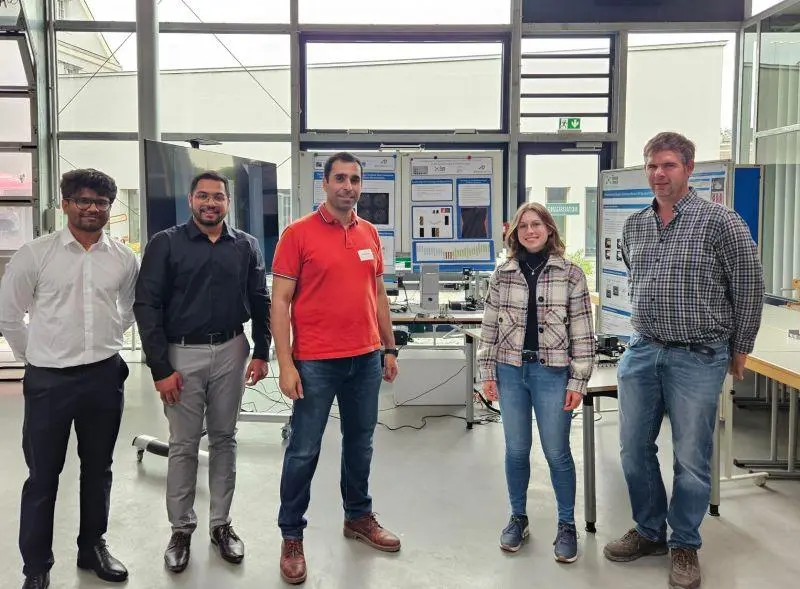
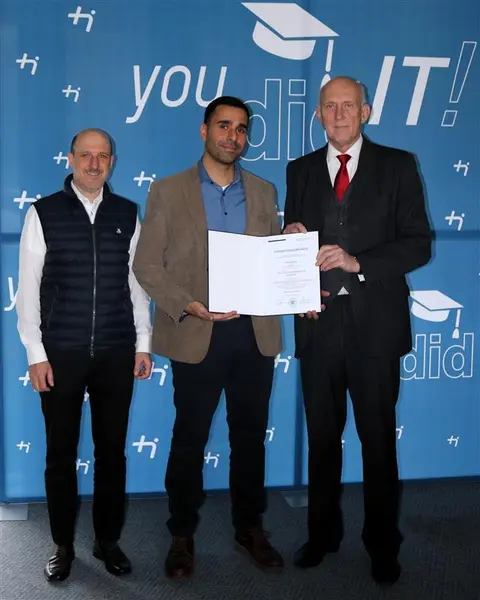
Tools are the backbone of modern industry - but their condition is often difficult to assess. Conventional measuring and testing systems quickly reach their limits, especially when it comes to complex cutting tools: surfaces are reflective, geometries are delicate, and crucial areas are barely accessible. Mühenad Bilal has focused his research on precisely this problem.
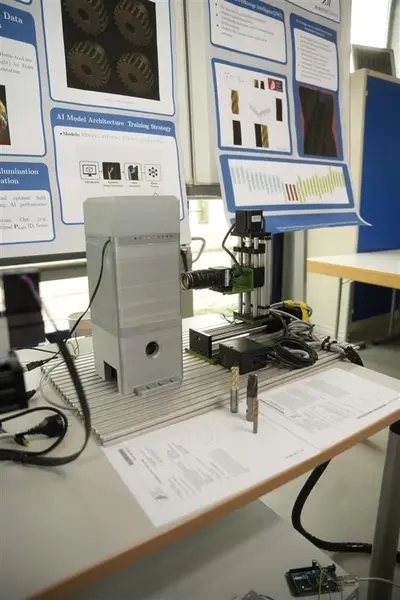
As part of his dissertation at THI's Doctoral School for AI, he developed a new type of imaging process that has since been patented by the EU. It enables high-resolution, true-colour and reproducible images of even very complex tools - without disturbing reflections and with consistent sharpness. Specially trained neural networks are used on this image basis to automatically recognise and describe wear in detail.
"For the first time, we are making the condition of tools objectively and reproducibly visible - even in places where reliable examinations were previously almost impossible," explains Bilal. This opens up new possibilities for industrial quality assurance: tool wear can be recognised at an early stage, tool life can be better planned, and rejects can be reduced.
The scientific work was accompanied by close collaboration with industry. Mühenad Bilal acquired and managed several industrial projects with a total funding volume of around ten million euros. The research also resulted in two Master's Theses, two Bachelor's Theses, and publications in renowned journals. In addition to the EU patent that has already been granted, a further international patent application is currently being processed.
The process is currently being developed to production and market maturity. The aim is to use it in tool manufacturing and in tool grinding shops, where the technology should enable automated, reliable, and economical wear testing - even for tools that were previously considered almost impossible to test due to their complex optical properties.
After studying physics, Mühenad Bilal worked at the Hanover Laser Centre and in the field of optical metrology. Today, he works as an AI project director at a medium-sized company, where he continues to drive forward the transfer of research results into industrial applications in close collaboration with THI.
![[Translate to English:] Logo Akkreditierungsrat: Systemakkreditiert](/fileadmin/_processed_/2/8/csm_AR-Siegel_Systemakkreditierung_bc4ea3377d.webp)