

"TONIC" project objective
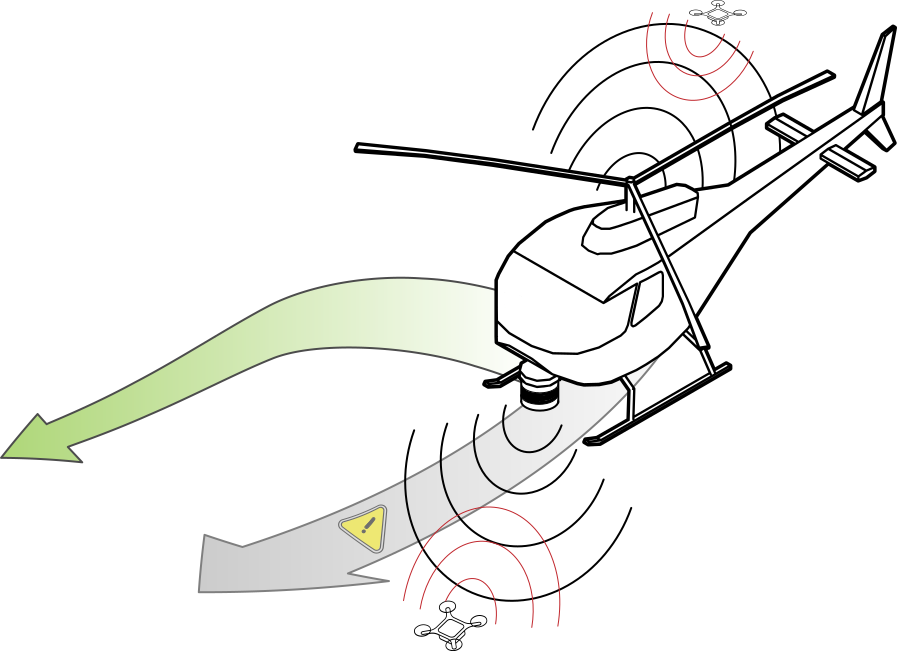
As part of the TONIC research project (“Expanding auTOnomous Capabilities through iNtuitive Pilot Interfaces”), Technische Hochschule Ingolstadt is working on technologies for the reliable detection of uncooperative flying objects. The focus is on how LiDAR sensors can be used on helicopters to reliably detect drones as intruders and initiate evasive manoeuvres.
The project is part of the LuFo VII-1 aviation research programme, which supports innovative technologies for civil aviation. Within TONIC, THI is particularly involved in defining the requirements for suitable LiDAR systems. To this end, virtual simulation environments are used to model realistic UAV intruder scenarios and generate synthetic LiDAR data. In addition, real-world measurements can be carried out using drones, swarm flight scenarios and under various environmental conditions. THI’s CARISSMA weather laboratory offers the possibility of specifically incorporating weather and visibility conditions into these tests.
The detection methods developed are then tested directly on a sensor platform. This allows for an early assessment of how reliably the algorithms perform under realistic conditions. The aim is to contribute to safe detect-and-avoid capabilities for future autonomous aviation systems, particularly helicopters.









![[Translate to English:] Logo Akkreditierungsrat: Systemakkreditiert](/fileadmin/_processed_/2/8/csm_AR-Siegel_Systemakkreditierung_bc4ea3377d.webp)